

Seasonal photography: Capturing nature’s transformation through light and land
Photography is more than freezing a moment in time. It is rather about telling a story of light, color, and the ever-changing land around us. Seasonal photography invites you to explore how landscapes evolve with the seasons and just how to use those changes to create compelling, evocative images.
Whether you are a photography enthusiast, professional photographer or just a traveler looking to expand your album of photo memories, understanding how light and land transform with each season helps you adapt your approach, and unveils opportunities that few photographers seize.
If you want to experience all seasons through the lens, joining Luka Vunduk’s Slovenia photo tours offers unique access to one of Europe’s most dynamic and scenic backdrops.
Spring photography - Reborn landscapes and a softer light
Spring is known as nature’s rebirth. In many regions, as well as the rolling valleys and alpine foothills of Slovenia, snow is melting or already melted, flowers bloom, and the vibrant green is slowly spilling back into the picture. Layers and textures return to the landscape, delicate blossoms show up in the foreground and majestic mountains rise in the distance. All of these combined are ideal for all sorts of creative multi-layered compositions.
Light and land characteristics:
Spring offers soft light with cool tones in the mornings, a fresh color palette of blush colors and greens. Adding a hint of mystique are misty valleys and flowing, shimmering rivers.
How to Shoot It:
Golden and blue play an important role in spring because the light is gentle yet dynamic, making it ideal for capturing wide, sweeping landscapes. Using wide apertures helps create depth by allowing delicate foreground blossoms to stand out sharply against the distant peaks. It’s also essential to scout locations early, as trails can open unpredictably while snow melts and the quality of light shifts from day to day. Early hours also give you access to gorgeous morning mists and foggy lands.
Tip: Spring is perfect for joining a Slovenia photo tour that focuses on rolling hills, blooming valleys, and emerging seasonal life. These tours take you to places many photographers miss in the shoulder season.
Golden and blue play an important role in spring because the light is gentle yet dynamic, making it ideal for capturing wide, sweeping landscapes.
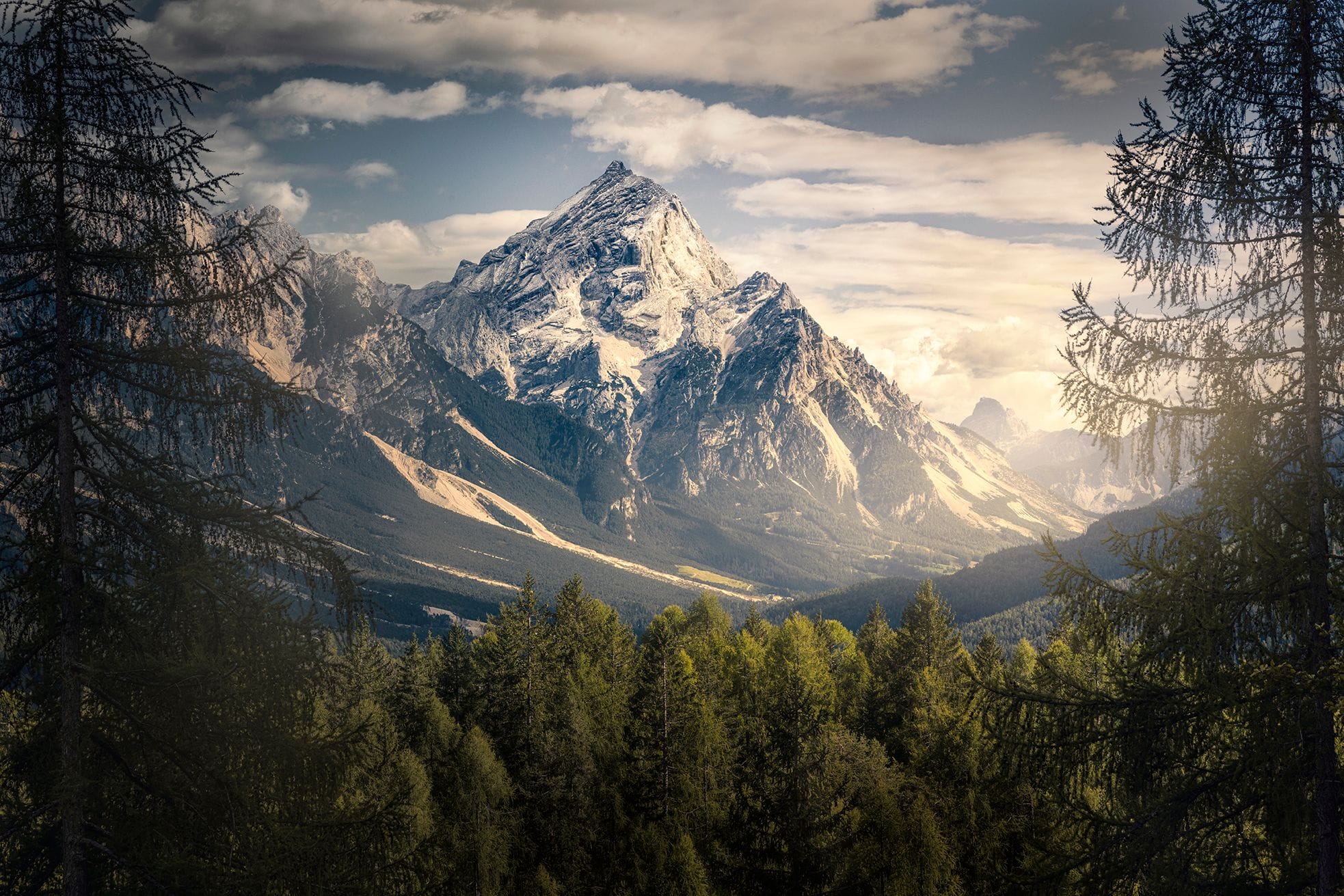
Summer photography: vibrant colors and high contrasts
Summer brings an explosion of bold colors and dramatic skies. The warm weather creates long days filled with intense light, which can be both rewarding and challenging for photographers. Around Slovenia’s lakes, forests, and gorges, the midday sun often produces harsh highlights and deep shadows, requiring thoughtful technique and careful exposure.
Light and land characteristics:
During this season, the days are noticeably longer, the sun is stronger, and the landscape is filled with saturated greens and active wildlife. Skies tend to appear crisp and blue, though summer storms can quickly transform them into dramatic, moody backdrops.
How to Shoot It:
To photograph summer landscapes effectively, polarizing filters can be extremely useful for reducing glare and enhancing the richness of the sky. It’s best to shoot early in the morning or late in the evening when golden hour creates softer tones and longer, more flattering shadows. Exploring shaded locations or forested trails can also help balance contrast and soften the harshness of midday light.
Summer’s intensity ultimately invites creative adaptation, whether through fine-tuning exposure settings or seeking out compositions that highlight the season’s vibrant details.
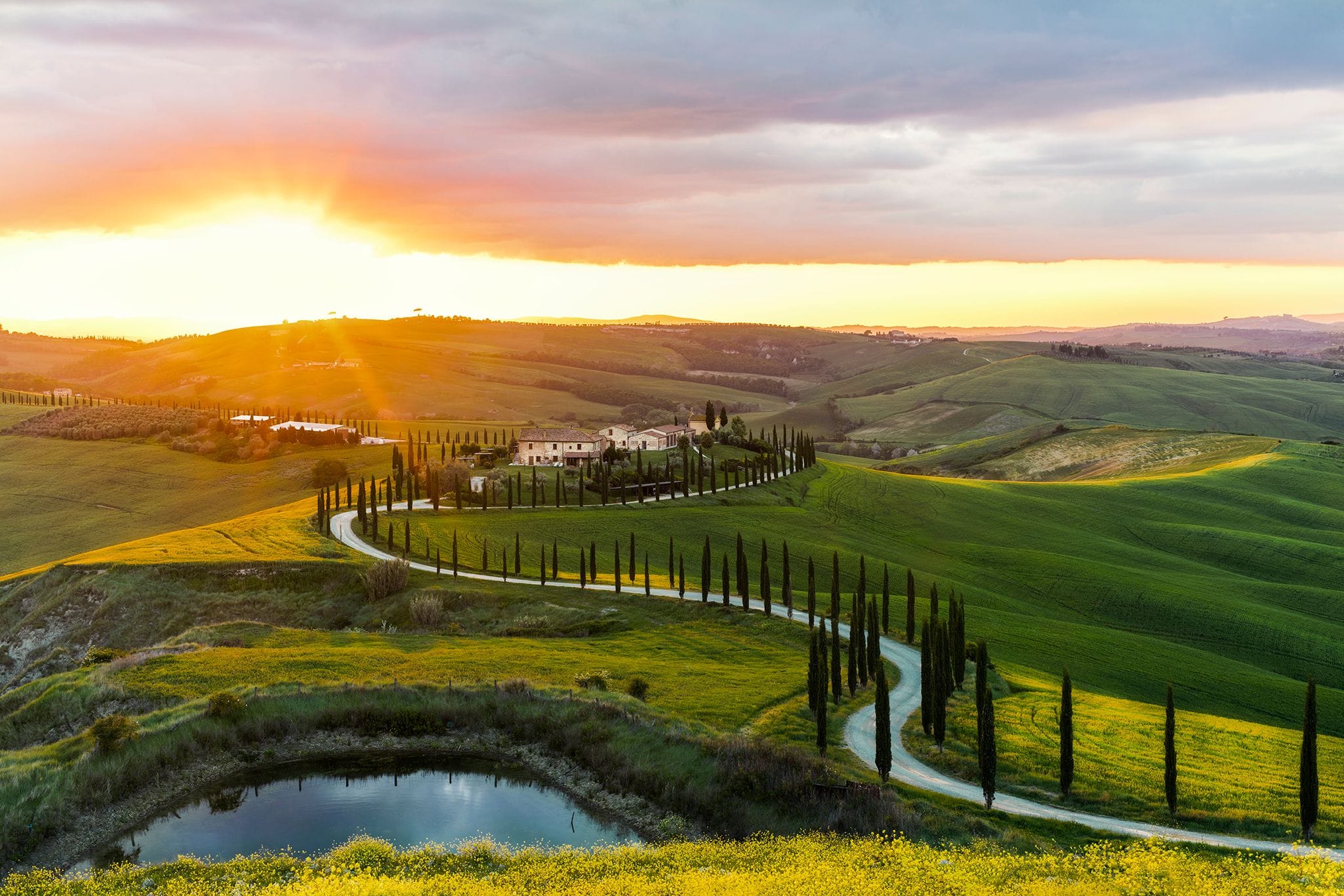
To photograph summer landscapes effectively, polarizing filters can be extremely useful for reducing glare and enhancing the richness of the sky.
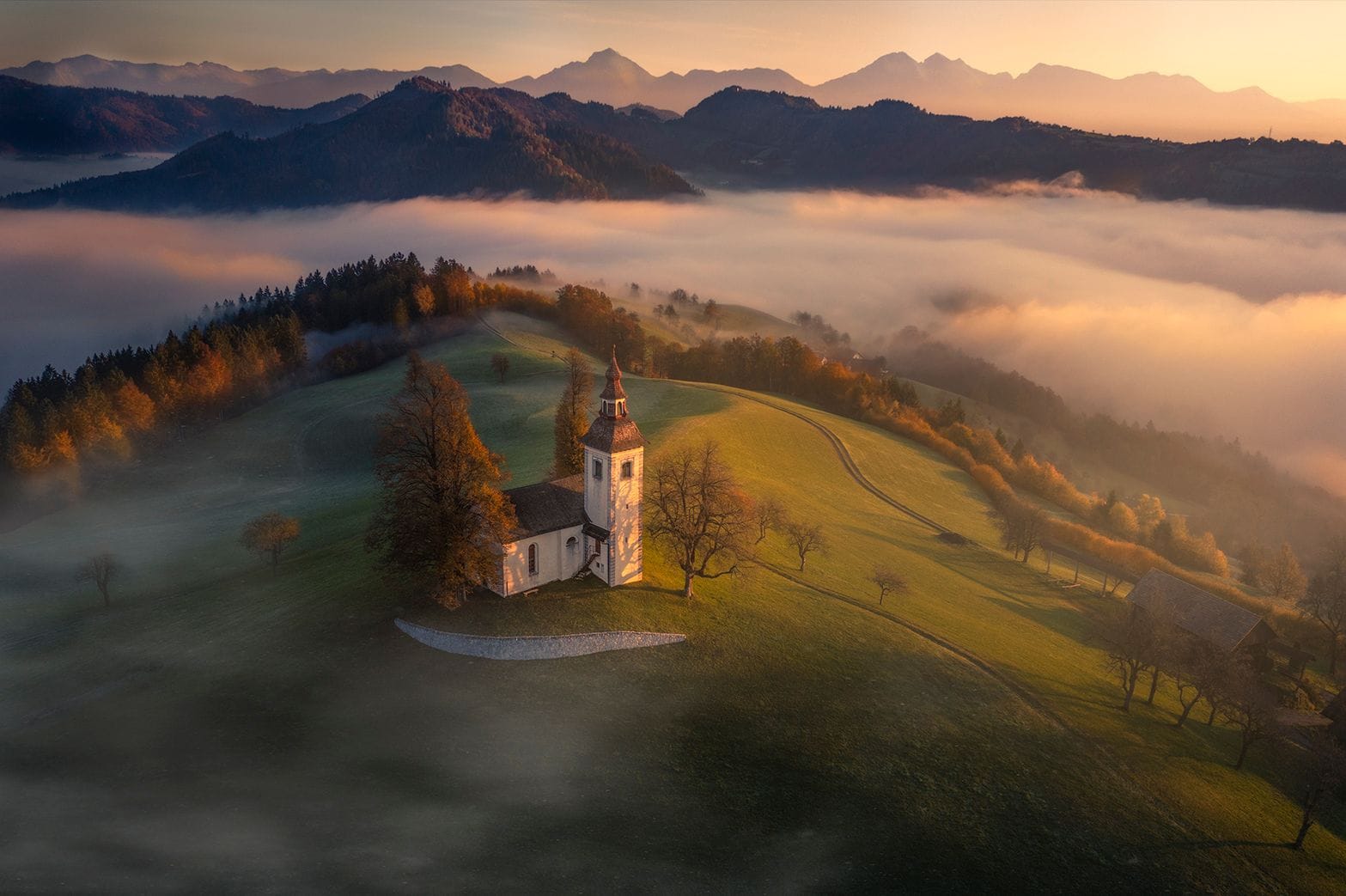
Autumn photography: magical colors and warm light
Autumn is often considered the star of seasonal photography, as forests ignite with gold, orange, and deep crimson tones. During this time of year, the sun sits lower in the sky, casting long, soft shadows and bathing the landscape in warm, rich light that naturally enhances the beauty of the scene. In Slovenia, this transformation is especially striking: the Julian Alps and surrounding valleys take on a painterly quality, making autumn one of the most rewarding seasons for dedicated landscape photographers.
Light and land characteristics:
The land is filled with warm golden tones, and the foliage shifts into intense reds and yellows, all set against crisp air and occasionally dramatic skies.
How to Shoot It:
To make the most of these conditions, photographers can lean into strong color contrasts by pairing fiery autumn leaves with cool mountain scenery or reflective water. Planning shoots around golden hour is particularly beneficial, as the light becomes warm and vibrant earlier and later in the day than in other seasons. Using leading lines such as footpaths, rivers, or rows of trees helps guide the viewer’s eye through the landscape and highlight the natural transitions of color.
For those who want to capture the very best of the season, joining specialized Slovenia photo tours in October can be immensely rewarding. These tours are designed to coincide with peak color and ideal lighting, ensuring that photographers can create their strongest and most atmospheric autumn images.
During this time of year, the sun sits lower in the sky, casting long, soft shadows.
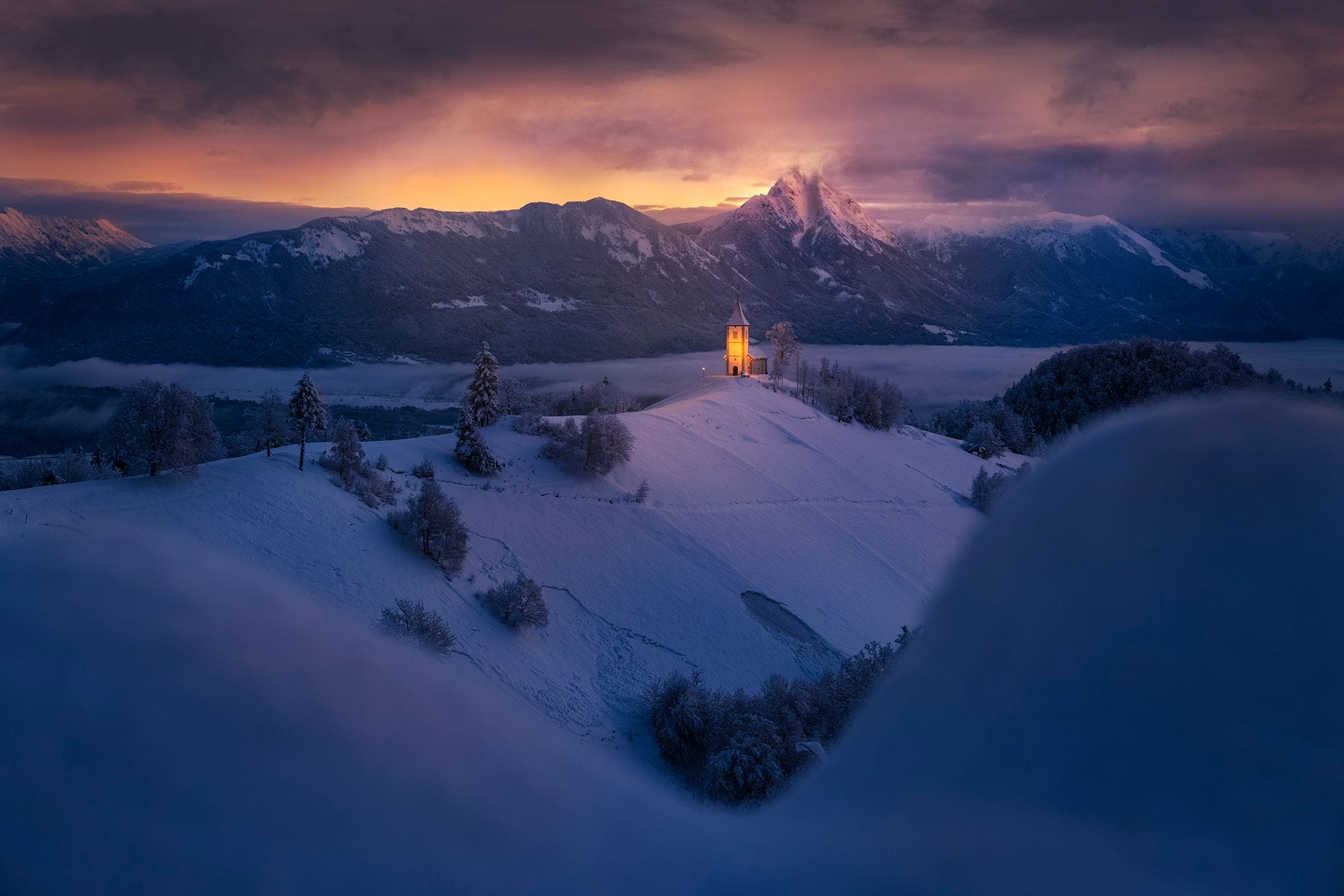
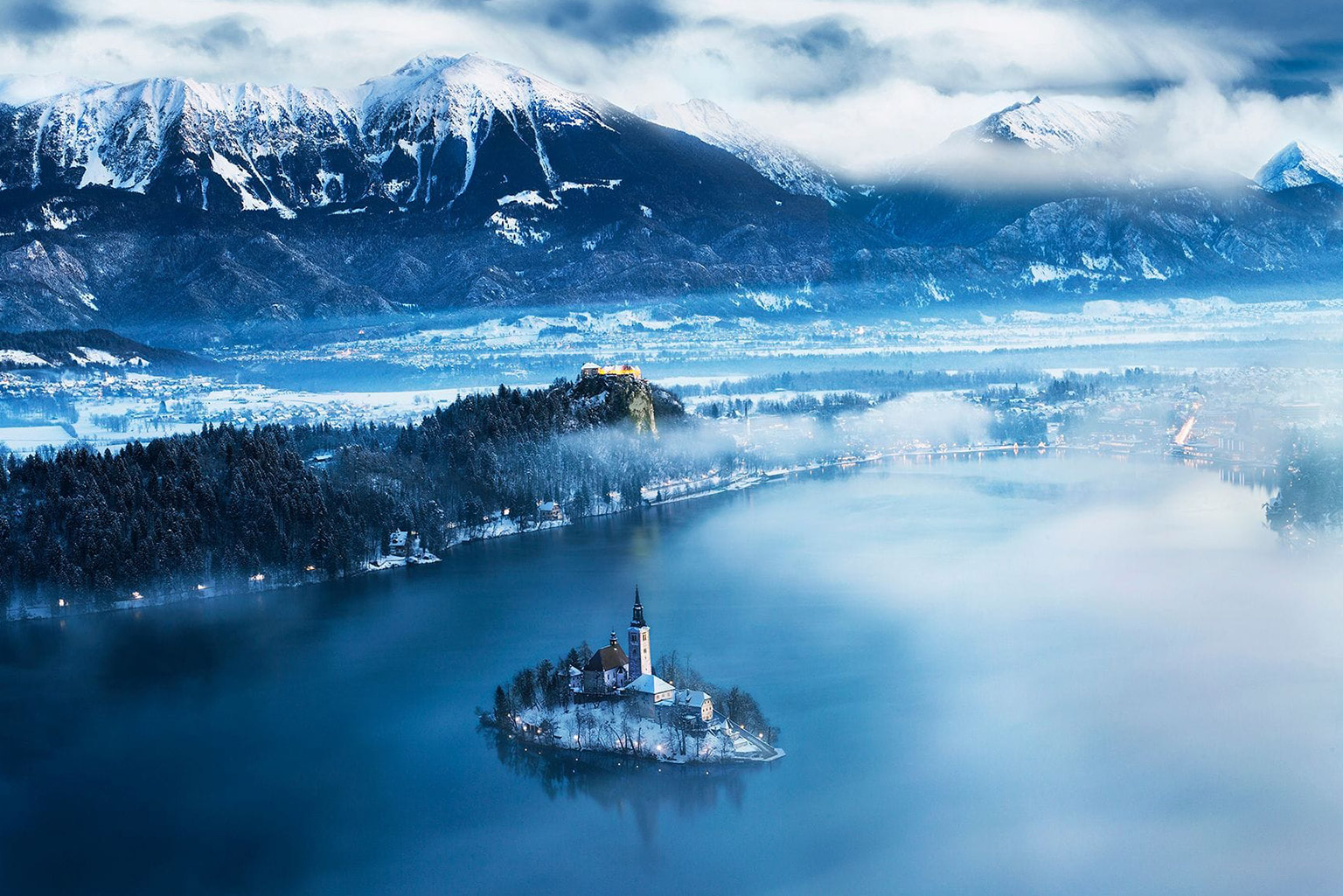
Winter photography: Peace, minimalism, snow and cool tones
Winter transforms the landscape by covering it in snow and frost, reducing visual clutter and creating beautifully simplified scenes. With limited color and strong contrast between white snow and darker elements, the season naturally lends itself to striking minimalist compositions. The light during winter is cooler, softer, and more diffuse, particularly on overcast days when shadows are gentle and details are subdued.
Light and land characteristics:
This season is characterized by shorter days and consistently soft light, while snow and frost smooth out textures and erase small details, making minimalistic imagery especially appealing. When snow is backlit at sunrise or sunset, the entire landscape can take on an ethereal glow that adds depth and atmosphere to photographs.
How to Shoot It:
To shoot winter landscapes effectively, it’s important to expose carefully because snow can mislead camera meters, often requiring positive exposure compensation to avoid dull, gray results. Winter also offers unique opportunities to photograph subtle textures and patterns, such as footprints, ice crystals, and wind-sculpted snow formations. Seeking low sun angles helps create longer shadows and enhances definition in an otherwise monochromatic world.
Because winter environments can be challenging, the season requires extra preparation and adaptability, from dressing appropriately for the cold to using stabilizing gear that performs well in snow and icy conditions.
To shoot winter landscapes effectively, it’s important to expose carefully because snow can mislead camera meters.
Adapting Your Technique Across Seasons
1. Understand Light Direction and Color
Seasonal shifts change the sun’s path. In winter the sun stays low, casting long shadows, while summer light is overhead and bright. Learn how the angle of light affects textures and mood in your shots.
2. Embrace Seasonal Foregrounds
A bloom in spring, lush grass in summer, crunchy leaves in autumn, or a snowfield in winter. Seasonal elements act as dynamic foregrounds that add depth and interest.
3. Gear for the Conditions
- Tripod for stability in low light and winter.
- Filters to manage reflections and sky contrast.
- Weather protection for the camera and yourself.
4. Plan but Stay Flexible
Nature never sticks to a schedule. Snow may arrive late, autumn colors may peak early, and spring blooms can be unpredictable. Observing weather and landscape patterns is a part of really mastering seasonal photography.
Why joining the Slovenia photo tours is great for learning seasonal photography
Slovenia might be small, but its landscapes are astonishingly diverse – from alpine ridges to emerald lakes, dense forests to dramatic gorges. Slovenia photo tours give you:
- Guided access to seasonal hotspots, and even the most hidden gems
- Local expertise on light, timing, and compositions.
Whether you seek fiery autumn colors, early spring blooms, or serene winter scenes, these tours are crafted to help you see the land and light as they truly are.


Master the Best Settings for Landscape Photography Today
Capturing stunning landscape photos requires the right camera settings. This article covers the best settings for landscape photography, offering practical tips on optimizing exposure, aperture, shutter speed, and ISO to ensure your photos are sharp and detailed.
Key Takeaways
- Shooting in RAW format preserves image quality and allows for greater flexibility in post-processing compared to JPEG.
- Utilizing the histogram and exposure bracketing can help achieve balanced exposure in landscape photography.
- Aperture settings between f/8 and f/16 enhance depth of field and sharpness, essential for capturing detailed landscape images.
Shoot in RAW for Maximum Image Quality
When it comes to capturing stunning landscapes, shooting raw is non-negotiable. Unlike JPEG, which compresses and limits the data captured by your camera’s sensor, RAW format preserves the entire image information. This means you have more flexibility in post-processing, allowing you to make extensive edits without degrading image quality.
RAW files capture more details in highlights and shadows, giving you greater control over exposure, sharpness, and color corrections. Opting to shoot raw over JPEG allows your landscape photos to retain their full potential, resulting in breathtaking raw images that pop with clarity and vibrancy.
Exposure bracketing is another powerful technique for capturing the dynamic range of a landscape when a single exposure isn’t sufficient

Optimize Exposure with Histogram
Understanding exposure is the bridge between capturing a landscape and transforming it into a captivating image. The histogram is an invaluable tool that helps you judge the amount of information captured in your photos, ensuring you expose to the right without overexposing highlights. This technique is crucial for maintaining the delicate balance between the brighter and darker parts of your scene.
Exposure bracketing is another powerful technique for capturing the dynamic range of a landscape when a single exposure isn’t sufficient. Taking multiple shots at different exposures allows you to merge them in post-processing for a perfectly balanced image. This method ensures that both highlights and shadows are well-represented, adding depth and richness to your landscape photos.
Aperture Settings for Depth and Sharpness
Aperture is a fundamental camera setting in landscape photography, affecting depth of field, exposure, and sharpness. For landscape shots, settings between f/8 and f/16 are typically recommended, as they provide the best balance between depth of field and sharpness. A smaller aperture, like f/11 or f/16, increases the depth of field, ensuring more of the scene is in focus. Using aperture priority mode can help photographers achieve the desired effects in their aperture setting landscape photography.
Using smaller apertures allows you to capture the entire landscape in sharp detail, from the foreground to the background. However, be cautious with apertures that are too wide, as they can result in a blurred foreground, which may not be desirable for landscapes. Every prime lens has an optimal small aperture, often around f/8, where it performs best in terms of sharpness.
Applying the hyperfocal distance technique can further enhance sharpness from the foreground to the background. Focusing on a point about one-third into the scene ensures that both the nearest and farthest elements are in sharp focus, making your landscape photos crisp and detailed. These focus points contribute to the overall clarity of the image.
Shutter Speed Considerations
Shutter speed plays a crucial role in landscape photography, controlling the amount of light entering the camera and capturing motion effects within the image. The choice of shutter speed depends on the desired effect and lighting conditions of the scene. For instance, using a slower shutter speed can create smooth, blurred motion effects in water and clouds, adding a dynamic quality to your photos.
Long exposures are particularly effective for artistic effects, such as blurring water to create a silky appearance or capturing cloud movement over time. However, in low light situations or when using very long exposures, you might need to use Bulb Mode to keep the shutter open for more than 30 seconds, especially in long exposure photography, to manage exposure time effectively.
On the other hand, a faster shutter speed is essential for freezing moving elements without blur, especially in scenes with active wildlife or fast-moving water. Balancing shutter speed with the other camera settings is key to achieving the desired exposure and creative effect in your landscape shots. A well-set combination of these elements can enhance your photography.

Balancing shutter speed with the other camera settings is key to achieving the desired exposure and creative effect in your landscape shots.
ISO Settings for Clarity
Maintaining image clarity in landscape photography often hinges on using the right ISO settings and the best settings for landscape photography. Ideally, you should aim to use the lowest iso, typically ISO 100, to minimize digital noise and preserve image quality. Keeping the ISO low is crucial for capturing the fine details and textures in landscapes without introducing noise. Additionally, understanding the setting for landscape can enhance your photography experience.
In situations with lower light conditions, you might need to increase the ISO to maintain a proper exposure, but be mindful of the trade-off between ISO and less noise. Modern cameras can handle higher ISO levels better, but it’s still best to use higher ISO settings sparingly to ensure your landscape photos remain clear and vibrant.
Focus Techniques
Achieving perfect focus in landscape photography requires a combination of techniques:
- Use One-Shot/Single-Servo focus mode, which is ideal for landscapes and provides accurate and stable focusing.
- Select a single point focus point.
- Focus about one-third into the scene to ensure a maximum depth of field, keeping both the foreground and background sharp while shooting landscapes.
Manual focusing is another technique commonly used by professional photographers for greater precision. Manually adjusting the focus allows you to fine tuned the sharpness exactly where needed, particularly useful for complex scenes with varied elements and depths, and exposure manually can enhance this process while shooting handheld.
White Balance Settings
White balance settings play a crucial role in rendering accurate colors and setting the mood of your landscape photos. Auto white balance (AWB) is generally reliable for most shooting conditions, allowing you to focus on other camera settings and composition. However, different lighting conditions might require a more thoughtful approach to white balance to ensure the scene’s colors are represented accurately.
Most landscape photographers prefer using daylight white balance to capture the contrast between cool ambient light and a warm sky. Adjusting the white balance creatively can also influence the mood of your photos, making them feel warmer or cooler depending on the scene and your artistic vision, especially when considering the light source.
Metering Modes Explained
Metering modes are essential for determining the correct exposure in landscape photography. Matrix metering is ideal for achieving balanced exposure across the entire image, making it a go-to choice for many landscape photographers. This mode evaluates the entire scene to determine the best exposure settings, ensuring that no part of the image is too bright or too dark.
Spot metering, on the other hand, is designed for photographing specific areas with significant light contrast. This mode is particularly useful when dealing with high contrast scenes, allowing you to expose for the highlights or shadows as needed. Understanding when to use each metering mode can greatly enhance the quality of your landscape photos, which can vary depending on the conditions.
Using Live View for Composition
Modern cameras offer Live View, a feature that can significantly enhance your landscape photography with digital cameras and improve various camera functions. Using Live View helps in:
- Accurately setting focus on distant subjects
- Providing a real-time display of your composition on a larger screen
- Fine-tuning manual focus by allowing you to zoom in on the display to ensure perfect sharpness with most cameras and a zoom lens.
The Grid View feature in Live View aids in aligning compositional elements effectively, helping you achieve a balanced and aesthetically pleasing shot with grid lines. Seeing real-time adjustments of camera settings helps you make informed decisions without relying solely on the viewfinder.
Polarizing filters are effective in minimizing reflections from surfaces like water or glass, enhancing color saturation and additional contrast in your landscape shots. Combining different filters can produce unique effects, such as using a polarizing filter with an ND filter for both glare reduction and prolonged exposure.
Utilizing a Tripod to Avoid Camera Shake
A tripod is an indispensable tool for landscape photography, ensuring stability and sharpness in your images. Using a tripod reduces camera shake, which is especially important when using slow shutter speeds or photographing in lower light conditions. This stability allows you to capture crisp, detailed images without the risk of blur from handheld shooting.
Tripods also enable the use of narrower apertures and longer exposure times, enhancing the greater depth of field and allowing for creative effects like motion blur in water or clouds. Maintaining stability with a tripod ensures that your landscape photos are sharp and professional-looking.
Leveraging Filters for Creative Effects
Filters are powerful tools for enhancing landscape photos, helping to manage challenging lighting and create unique effects. Neutral density (ND) filters allow for extended exposure times without altering colors, making them perfect for creating motion blur in flowing water. Graduated ND filters help balance exposure between bright skies and darker foregrounds, essential for dynamic landscape scenes.
Polarizing filters are effective in minimizing reflections from surfaces like water or glass, enhancing color saturation and additional contrast in your landscape shots. Combining different filters can produce unique effects, such as using a polarizing filter with an ND filter for both glare reduction and prolonged exposure.
Post-Processing Tips
Post-processing is a vital step in landscape photography, allowing you to enhance and perfect your images. Start by adjusting exposure, contrast, and colors to bring out the best in your photos. When shooting in RAW format, you have greater flexibility in adjusting white balance during post production, ensuring accurate color representation.
Selective editing techniques, such as applying gradients or sky replacement, help balance exposure and emphasize important elements of the landscape. Sharpening is a crucial final step in editing, enhancing detail and ensuring your photo is prepared for its intended output using computational photography techniques.
Selective editing techniques, such as applying gradients or sky replacement, help balance exposure and emphasize important elements of the landscape.

Join Photo Tour with Luka Vunduk
Embark on extraordinary photography journeys, guided by the world-renowned, award-winning photographer Luka Vunduk. Photo tours offer unique opportunities to capture stunning landscapes while learning from Luka’s extensive expertise and experience. Participants can explore iconic locations like Dolomites, Lake Bled, Wonders of Mangystau, Tassili n’Ajjer and more. Small group sizes ensure personalized attention during workshops, making these tours enriching for photographers of all skill levels.
Whether you are photographing the dramatic cliffs of the Dolomites, the crystal-clear waters of Croatia, or the breathtaking scenery of Slovenia, these tours provide unparalleled chances to hone your landscape photography skills. Luka Vunduk guide you through techniques in composition, lighting, and post-processing, helping you create stunning landscape photos and elevate your craft.
Browse through the options to find the perfect landscape photo tour that aligns with your goals and preferences. Whether you’re looking to explore national parks, iconic landmarks, or hidden gems, these tours take your landscape photography to the next level.
If you’re looking for a more personalized experience, you can also join a private photo tour, where you’ll receive exclusive guidance tailored to your own photography goals.
Summary
Mastering the best settings for landscape photography involves understanding and adjusting various camera functions to capture the beauty of the natural world. From shooting in RAW format and optimizing exposure with histograms to selecting the right aperture, shutter speed, and ISO settings, each element plays a crucial role in creating stunning images. Techniques like manual focusing, using Live View, and employing filters further enhance the quality and artistic expression of your photos.
As you apply these tips and techniques, remember that landscape photography is not just about capturing a scene but conveying the emotion and grandeur of the moment. Keep experimenting, learning, and exploring new landscapes. For those seeking further inspiration and hands-on experience, joining a photo tour with an expert like Luka Vunduk can provide invaluable insights and opportunities to refine your skills.
Frequently Asked Questions
Why is shooting in RAW format recommended for landscape photography?
Shooting in RAW format is recommended for landscape photography because it preserves more details, offering superior control over exposure, sharpness, and color adjustments without compromising image quality. This ensures your landscapes can be edited to their fullest potential.
How can I ensure proper exposure in high contrast scenes?
To ensure proper exposure in high contrast scenes, utilize the histogram to assess captured information and consider exposure bracketing to cover the full dynamic range. This approach will help you achieve a well-balanced image.
What aperture settings are best for landscape photography?
For landscape photography, aperture settings between f/8 and f/16 are ideal, as they help achieve extensive depth of field and sharp sharpness throughout the image.
How do I reduce camera shake in my landscape photos?
To effectively reduce camera shake in your landscape photos, utilizing a tripod is crucial for stability, particularly in low light or with slow shutter speeds. Ensure your camera is securely mounted and explore additional techniques like using a remote shutter release for optimal results.
What are the benefits of joining a Slovenia Photo Tour with Luka Vunduk?
Joining a Slovenia Photo Tour with Luka Vunduk offers personalized guidance from an award-winning photographer, allowing participants to enhance their landscape photography skills while exploring iconic locations. This immersive experience ensures valuable hands-on practice in a stunning environment.

Top 10 Essential Landscape Photography Tips for Stunning Shots
Looking to improve your landscape photos? These essential landscape photography tips will guide you on choosing the right gear, mastering settings, and finding creative perspectives.
Key Takeaways
- Select the right camera and lens, particularly wide angle and telephoto lenses, to enhance landscape photography.
- Master manual exposure settings (shutter speed, aperture, ISO) to achieve well-exposed images in varying lighting conditions.
- Utilize post-processing techniques and continuous practice to improve landscape photography skills and produce stunning images.
Choose the Right Camera and Lens
Selecting the right digital camera and lens is crucial for landscape photography. Most photographers prefer DSLR cameras or mirrorless cameras, as many cameras offer superior image quality and performance, especially for capturing intricate landscape details.
Wide angle lenses are ideal for expansive scenes, while telephoto lenses let you isolate subjects and compress distances for a unique perspective. The right camera and camera lens combination will help you achieve proper exposure and capture the natural world’s beauty with clarity and depth using a wide lens.
Wide Angle Lenses
Wide angle lenses are fundamental in landscape photography. They capture a broader perspective, making them ideal for vast landscape scenes. These lenses create a sense of depth and perspective, enhancing the overall composition of your images.
The typical focal length for these lenses is shorter than 24mm, allowing you to capture stunning landscape photos that include vast skies and expansive terrains. Using a wide angle lens can transform your landscape photos into breathtaking works of art.
Telephoto Lenses
Telephoto lenses are equally valuable in landscape photography, offering the ability to:
- Capture distant subjects and intricate details effectively
- Isolate specific elements within a landscape, making them appear closer and more prominent
- Create a compression of distances that results in a more layered and three-dimensional effect in your landscape photographs
Unlike wide angle lenses, telephoto lenses provide these unique advantages.
Adding telephoto lenses to your gear can highlight key features, enhancing the depth and intrigue of your images.
Wide angle lenses are fundamental in landscape photography. They capture a broader perspective, making them ideal for vast landscape scenes.

Master Manual Exposure Settings
Mastering manual exposure settings is vital for proper exposure in landscape photography. The exposure triangle consists of:
- Shutter speed
- Aperture
- ISO These three elements control overall exposure. Balancing these settings allows you to capture well-exposed images in various lighting conditions.
This expertise enables you to adapt to different scenes, achieving sharp images or dynamic visuals with motion blur.
Aperture Settings
Aperture settings are crucial in landscape photography for determining depth of field. Using an aperture setting between f/8 and f/16 maximizes maximum depth of field, keeping more elements in focus. Camera settings, such as a narrower aperture, like f/11, are often used to ensure sharpness from foreground to background while utilizing aperture priority mode.
In low light, combining small apertures like f/16 with low ISO settings maintains image quality while capturing more details.
Shutter Speed
Shutter speed is crucial for capturing motion in landscape photos. A fast shutter speed of 1 to 3 seconds is recommended for dynamic effects like smooth water movement, while a slower shutter speed can be used for different effects.
Using ND filters can help manage bright lighting conditions, enabling longer exposures to achieve motion blur in moving subjects. A tripod is essential when using slower shutter speeds to avoid camera shake and ensure sharp images.
ISO Sensitivity
ISO sensitivity affects the image quality and exposure in your landscape photos. For landscape photography, maintaining an ISO range between 100 and 400 is ideal for preserving image quality. Starting with an ISO setting of 100 helps minimize noise and maintain the clarity of your images.
Adjusting the ISO sensitivity according to the lighting conditions allows you to achieve the correct exposure without compromising on image quality.

Aperture settings are crucial in landscape photography for determining depth of field.
Utilize a Tripod for Stability
A tripod is crucial for landscape photography, providing the stability needed for sharp, clear images. It minimizes camera shake during longer exposures and slower shutter speeds, ensuring crisp, detailed photos.
Choose a tripod that is strong, stable, and lightweight for outdoor shooting. Features like spiked feet and rubber overshoes improve stability on various terrains. A remote shutter release or self-timer further reduces camera movement during long exposures.
Plan Your Shots Around Lighting Conditions
Lighting is crucial in landscape photography, and planning around optimal conditions can enhance your images. The golden hour and blue hour are the best photography tips to shoot, offering dramatic and interesting light.
Arriving early lets you set up and determine the best settings for the scene. Visiting the same location multiple times helps you capture ideal lighting and composition for stunning photos.
Golden Hour
Golden hour, shortly after sunrise and before sunset, is loved for its warm, diffused light. It enhances colors and reduces harsh shadows, creating a magical atmosphere.
The low angle of the sun during golden hour also casts long shadows and highlights textures, adding shallow depth and dimension to your beautiful landscape images.
Blue Hour
The blue hour, just before sunrise and after sunset, offers unique lighting that enhances the serenity and mood of photos. With cooler tones and soft, even lighting, it elevates the impact of your landscape images.
Shooting during the blue hour lets you capture a great shot of tranquil scenes with a peaceful atmosphere.
The low angle of the sun during golden hour casts long shadows and highlights textures.

Compose Your Scene Thoughtfully
Thoughtful composition is key to engaging landscape images. Basic rules like symmetry, balance, framing, leading lines, and the rule of thirds help arrange compositional elements effectively. Balancing shapes, noting strong lines, and having a clear focus are essential for compelling photos.
Incorporating these elements helps capture landscape shots that draw and hold the viewer’s attention.
Rule of Thirds
The rule of thirds grid divides an image into nine parts using a grid. Positioning key elements along these lines creates balance and emphasis. Placing the horizon on the top or bottom third of the frame can create a more engaging composition.
Placing points of interest at the grid’s intersecting lines makes your photos more dynamic and visually appealing.
Leading Lines
Leading lines guide the viewer’s attention and create a sense of movement. Elements like roads, rivers, or fences can form these lines, directing focus toward the main subject and enhancing scene depth, often serving as a leading line that enhances the composition.
Starting leading lines from outside the frame draws the viewer’s eye into the image, emphasizing important features and making the photo more engaging.
Foreground Interest
Interesting foreground elements add depth and dimension to your photos. An important feature is that textures like rocks, grass, or water create a captivating foreground, while human subjects or notable features provide scale and enhance perspective.
Focusing on the foreground helps capture dynamic photos that draw the viewer’s attention to the focus point in the scene.
The rule of thirds grid divides an image into nine parts using a grid. Positioning key elements along these lines creates balance and emphasis.
Use Filters to Enhance Your Images
Filters enhance the visual appeal of your images. Polarizing filters reduce glare and enhance color vibrancy, while Neutral Density (ND) filters allow longer exposures for smooth motion effects.
These filters help achieve stunning photos with enhanced quality and depth. Adding photography gear to your gear can significantly elevate your landscape photographs.
Polarizing Filters
Polarizing filters:
- Remove glare and darken the sky, enhancing overall colors.
- Are effective in scenes with water, bright skies, or reflective surfaces.
- Deepen blue skies and add contrast to clouds. A polarizing filter can significantly improve these effects.
These filters screw onto the lens and can be rotated by hand to adjust their effect, providing flexibility and control.
ND Filters
Neutral Density (ND) filters are essential for longer exposures in bright daylight. They enable smooth water surfaces and motion blur by slowing the shutter speed.
Adding ND filter enhances creativity and control over exposure, allowing for dynamic and visually striking photos.
Focus on the Details
Focusing on details is crucial for sharp, clear photos. Techniques like focus stacking, which combines images with different focus points, increase depth of field. This ensures sharpness from foreground to background, difficult to achieve with a single shot.
Stable shooting conditions are crucial for effective focus stacking, as any movement can cause misalignment and blur. Paying close attention to details with a careful eye ensures your landscape photos are sharp and captivating.
Experiment with Different Perspectives
Experimenting with different perspectives can lead to unique, stunning images. Consider the following approaches:
- Move a few steps in a different direction to change the composition.
- Explore various camera heights to significantly alter the composition.
- Use different angles to reveal unexpected elements and create dynamic compositions.
Being open to new perspectives helps discover vantage points in the Pacific Northwest that transform ordinary scenes into extraordinary fine art photos of the natural world while taking photographs.
High and Low Angles
High and low angles greatly influence composition and storytelling. Capturing from a low angle emphasizes foreground details and creates a sense of depth, making the composition more compelling from a different angle.
Shooting landscapes from an elevated perspective provides a broader view of the landscape and highlights its grandeur. Experimenting with both angles can reveal unique compositions and enhance your photography style.
Vertical Orientation
Landscape photography can be effectively done in vertical orientation. Changing to vertical can provide a fresh perspective, creating new dimensions and enhancing the viewer’s experience by capturing the height and grandeur of the landscape image and taking landscape pictures, as a landscape photographer would appreciate.
A stunning landscape photograph can truly elevate the art of landscape photography.
Incorporating vertical shots into your portfolio adds variety and depth to your good landscape shot landscape photography.
Post-Process Your Photos for Perfection
Post-processing is essential for stunning landscape photos. Software like Adobe Photoshop and Lightroom allow adjustments to contrast, saturation, and exposure, improving the dynamic range of your images.
Focus stacking enhances the quality of large prints by maintaining sharp detail across the image. Editing should enhance the photo quality rather than fix poor initial captures.
Using layers in editing software allows for non-destructive adjustments, letting you experiment without losing original image quality.
RAW Processing
Shooting in RAW offers greater flexibility in post-processing because RAW files preserve all image information. This allows for:
- Higher quality images
- The ability to correct exposure errors
- The ability to correct white balance errors
- More editing control than JPEG
Expanding the dynamic range, RAW format enables capturing more detail in both shadows and highlights, making it invaluable for landscape photography.
Software Tips
Software tools for post-processing are essential for stunning visual impact. Shooting in RAW preserves a wider range of colors and details, especially beneficial for landscape photography. JPEG files lack the extensive editing control that RAW images provide.
Lightroom is highly recommended for adjusting contrast, saturation, and exposure in your landscape photos.

Software tools for post-processing are essential for stunning visual impact.
Keep Practicing and Learning
Improving landscape photography requires practice, learning, and the right tools. Practicing outdoors can make a bigger difference than new gear. Attending workshops, taking online courses, and reading photography books are excellent ways to enhance your skills.
Hiring an expert or mentor can provide valuable insights and help improve your photography skills quickly. By staying committed to learning and practicing, you can elevate your landscape photography to new heights.
Summary
In summary, mastering landscape photography involves a blend of technical skills, creative composition, and continuous learning.
From choosing the right camera and lens to mastering manual exposure settings, using filters, and experimenting with different perspectives, each step is crucial in capturing stunning landscape photos.
Remember to plan your shots around lighting conditions, focus on the details, and utilize post-processing tools to enhance your images.
By following these essential tips and staying dedicated to practicing and learning, you’ll be well on your way to creating breathtaking landscape photographs that truly stand out.
If you’re ready to take your skills to the next level and gain hands-on experience from a renowned Canon Ambassador Luka Vunduk, join us on one of our inspiring Slovenia Photo Tours, or explore breathtaking landscapes on our tours in the Dolomites and Croatia or visit Photo Tours page to find the perfect adventure that matches your style and interests.
For the most demanding guests, we also offer the option of a private photo tour, providing a personalized and exclusive experience to elevate your landscape photography skills.
Let your passion for photography grow through real adventures, expert guidance, and unforgettable moments in nature.
Keep exploring, keep shooting, and let the beauty of the natural world inspire you.
Frequently Asked Questions
What type of camera is best for landscape photography?
For landscape photography, a DSLR or mirrorless camera is your best choice, as they provide superior image quality and flexibility. This equipment will help you capture stunning landscapes effectively.
Why are wide angle lenses important in landscape photography?
Wide angle lenses are essential in landscape photography as they allow for a broader perspective and enhance depth, resulting in more engaging compositions. Utilizing these lenses helps to fully capture the grandeur of the landscape.
How does using a tripod benefit landscape photography?
Using a tripod significantly reduces camera shake, resulting in sharper images and allowing for longer exposures that capture more detail in landscape photography. This stability is essential for achieving high-quality, clear photographs.
What is the golden hour and why is it important?
The golden hour is the period shortly after sunrise and before sunset when light is warm and diffused, making it crucial for photography as it enhances colors and minimizes harsh shadows. Capturing images during this time can significantly improve the aesthetic quality of your photos.
What are the benefits of shooting in RAW format?
Shooting in RAW format allows for greater flexibility in post-processing and ensures that all image information is preserved, making it easier to correct exposure and white balance errors. This ultimately enhances the quality of your final images.

How to find location for photography (LOCATION SCOUTING)
Photo location scouting: Whether you are a professional landscape photographer, an aspiring artist just starting out, or maybe just a passionate traveller searching for a beautifully composed moment – the craft of taking a photo always begins with one essential question: how to find location for photography.
Finding the right place for a photo is often the difference between a decent shot and an unforgettable image.
For a photographer, every setting holds potential – but knowing how to approach, research, and evaluate it is what elevates good photography to great. Whether you’re scouting for a personal project, for a photography assignment, or simply for a new adventure, the process of finding a location is where the story begins.
At this time, we are actively location scouting for the upcoming Slovenia photography tours, making it the perfect opportunity to break down the full process.
In this post, we’ll walk you through a step-by-step approach to location scouting – exactly how it’s done by a professional landscape photographer and a leader of numerous photography tours, both across Slovenia and in other breathtaking photography locations beyond his home country.
STEP 1: DEFINE YOUR GOAL FOR PHOTOGRAPHY.
Initial part of a thorough location scouting session starts behind the screen. Of course, you have to start with intent.
Define what you believe would make a location unique. What is your photography style? How much equipment are you carrying with and are there any limitations your equipment or you have? Are you going alone or will you be a part of a group?
As the leader of the Slovenia photography workshop, Luka Vunduk always has to be thoughtful of the many different people that join, so the location for photographers has to be fairly accessible, but still intriguing enough.
And of course – what do you want to take pictures of? Nature has a big set of different scenery variations for photography – from mountain views, to lakes, rivers and stunning waterfalls, deserts, forests and all sorts of woodlands, canyons and cliffs… You have many options to pick from.
Once you have your idea thought out, you can move onto the actual location scouting part for photography.
STEP 2: FINDING THE PERFECT LOCATION - VIRTUALLY.
Community clues
Are you asking yourself how to find location for photography? Start by looking into certain communities. Different enthusiasts have different points of view, have discovered different parts of the world and overall have all sorts of intel about experiences and location scouting.
The perfect example are facebook groups. There are communities that know how to get around terrain and know how to appreciate landscape, you just have to find them.
In our case, location scouting for a location meant as a part of the Slovenia photo tour, the location scouting included finding different slovenian nature enthusiasts, which include different hiker and backpacker groups, biker and van life groups – even horse riding groups and then also drone enthusiasts that have flown in the area, mountain climbers, kayakers and other outdoor adventure groups.
You really have to take your time with this step, because the internet is a pool of posts, blogs and conversations, and you may not always find your answers immediately.
After finding a lead, first do a few searches to find as much information as possible, so you don’t miss any important notes and details. Don’t forget to read about bad experiences too, to save yourself from any possible mishaps.
Exploration of the virtual land
There are many digital tools you can use to prepare yourself before going on the location – also known as figuring out micro photography locations. Apps like Google Earth, PhotoPills, Google maps and Gaia GPS are an amazing help when starting to plan your adventure.
You can scan terrain directly from your screen, identify elevation, find out what the sun and moon movement is like and you can even look at crowdsourced images.
However, you have to note that with these, you most likely will not find your perfect photography spot, because the truly untouched perspectives and hidden gems will not be pinned on the map.
That is also why during our Slovenia photography workshops, we emphasize on-location scouting.
First and foremost, it is our homeland, which we know, so it is easier to get around, and exploring it in person feels special – and secondly, Slovenia has so many gems that are not captured on satellite images – at least not from perspectives that we would want to capture.
Once all digital options are exerted, it is time to pack your bags!
This digital part also includes figuring out the logistics for your departure, stay and making out all other details of your trip, including what to wear and bring with you, what the weather is going to be like, to look for if you will you need any extra equipment and such…
Never take this part lightly, because you want to be prepared as best as possible, to have a full experience on the location.
STEP 3: EMBRACE THE EXPERIENCE - and document everything.
After the virtual planning, there is still nothing like standing in the location yourself. This is where all your plans and vision will meet reality and will give you the best experience of a lifetime.
Whatever you find – document it. Many locations that we include in our tours started that way – as personal discoveries saved and documented over time and years of personal explorations.
Documenting your findings includes GPS tagging, notes, and behind-the-scenes shots and videos.
Many of the photos included in this post are behind the scenes shots from our latest location scouting session at Peričnik Waterfall, and are also serving as location documentation.
You can join our Slovenia photography tours to see what discoveries this scouting session resulted in.
ON LOCATION TIPS AND TRICKS
Weather and seasons
Before going on location – and when you are there, you will have to adapt to weather conditions (or embrace them), so here are some useful apps to help you with that:
– Windy: It is a powerful weather visualization app, which gives you highly detailed information and detailed maps showing the weather around the world. To get the most accuracy from it, consider upgrading to the paid version, which uses more accurate weather models, ensuring you will be informed of the forecast properly.
– Clear Outside: It has detailed forecasts for more remote locations. It was developed by First Light Optics, primarily tailored for astronomers, but equally useful for you, when out and about, trying to capture perfect moments.
Pro photographers know, sometimes scouting at midday or bad weather has its advantages. You get to see the accessibility of the location properly, you can sense potential hazards, and you get to save the more precious morning or evening hours for a time you will come already prepared for a proper photo session.
Some trails in Slovenia are difficult to travel through in low light. That’s why during our Slovenia photography workshops, we often scout during non-optimal light to plan our perfect return.
You should as well think seasonally. A location is never the same and it changes with seasons, so you should think about returning often, to see what time of the year compliments your location most.
Conversations with locals and avoiding tourist spots
Talk to people from the area, but don’t ask for tourist spots.
Scout around and find out if anyone knows a secret spot – and assure them you won’t be going around telling the whole world about it, but rather just show the beauty of it with a level of privacy.
Tourist spots are NOT your location. The moment you see a group of people standing in a place, pointing and shooting at the same scene, you should recognise this is not what you are looking for.
The standout during our scouting at the Peričnik waterfall showed up the moment we stepped away from the crowd, to some trails that are not necessarily open for tourists, climbed behind the waterfall and looked out from the complete opposite side.
Sometimes you should think about what it would be like standing in the place you are trying to take a picture of now, and photograph from that direction.
Avoid “ideal” camera settings
As some settings are labeled as perfect for certain scenery, you should still experiment. As we were standing at Peričnik waterfall we thought it was important to point out just how important details are in some cases.
In our situation, the waterfall had a level of beauty that only showed when we backed away from the classic “silky water effect” and let some water drops shine individually through the camera lens.
Note that no number is “ideal” in every situation. Remember to observe with your eyes too as well as through the camera.
Try to think of what the scene makes you feel, and what would make the photo come as close to that moment as possible. Create your own “ideal” numbers.
FINAL THOUGHTS: Scouting should be an experience.
Scouting is more than just a step before taking a photo – it’s a mindset that reshapes the way you connect with your surroundings.
For photographer, it can be the right approach that transforms an ordinary scene into something truly unique. It’s not only about finding the perfect composition, but about discovering locations that you experience on a personal level.
What you find along the way can make your photo not just visually strong, but emotionally powerful.
Some locations can also have a personal meaning – as a story, a memory, or a quiet moment of connection. That’s when your photo becomes more than an image – it becomes a reflection of what that place felt like with you standing there.
These experiences can be unpredictable, spontaneous, and deeply rewarding. You can find the most interesting frames when you’re not chasing perfection, but paying attention.
That mindset can also have a lasting impact on how you approach your work long after the tour ends.
So take notes. Look behind the obvious. Find the perspective that no one else noticed. Create your own moments, your own angles, your own story. The best scouting isn’t always about the location – it’s about how it speaks to you.
Ready to explore Slovenia with a new mindset?
Discover hidden gems, try out your new scouting skills, and shoot side-by-side with a professional, multiple times awarded, Canon ambassador photographer Luka Vunduk on our next Slovenia photography tour – who will help you find the right compositions, unlock creative angles, and elevate your photography to the next level.

Top Tips on How to Take Great Landscape Photos
Want to know how to take great landscape photos? Start with mastering composition, understanding light, and selecting the right gear. In this article, we’ll cover essential tips that will elevate your landscape photography from basic to breathtaking.
Key Takeaways
- Master composition techniques like the rule of thirds and leading lines to create engaging landscape photographs.
- Utilize the magic of golden and blue hours for optimal lighting to enhance the atmosphere of your images.
- Plan your shots meticulously and edit in RAW to capture and present stunning landscape visuals.
Mastering composition involves several key techniques such as simplification, the rule of thirds, leading lines, and balance.
Mastering Composition in Landscape Photography
Effective landscape photography relies on meticulous compositional techniques to enhance the visual storytelling of each shot. Framing your shot and creating balance with shapes ensures key elements are effectively positioned within the scene, engaging the viewer’s eye and attention. This approach is essential in developing a unique photography style.
Mastering composition involves several key techniques such as simplification, the rule of thirds, leading lines, and balance. These techniques not only enhance the visual impact of your landscape photographs but also ensure that the subject and surrounding elements harmonize for better landscape photographs.
Rule of Thirds
The rule of thirds is a fundamental principle in landscape photography that involves breaking the image into thirds both vertically and horizontally. This technique encourages photographers to strategically position important elements along designated thirds grid lines to create a more dynamic landscape photo.
For instance, positioning the horizon on the top or bottom third can enhance the composition, with a dramatic sky positioned in the bottom third for more impact. Using the rule of thirds enhances image balance and draws the viewer’s eye to critical components.
Leading Lines
Leading lines are powerful tools in landscape photography, directing the viewer’s attention from one part of the image to another and creating a sense of movement. These lines can draw attention to the main subject and are most impactful when they start from the edges of the frame and lead into the center.
Incorporating natural lines, like rivers or roads, can guide the viewer’s eye towards the focal point, establishing a sense of depth and leading them in the natural world right direction.
Foreground Interest
Foreground interest is essential in landscape photography as it leads the eye through the scene and complements distant scenery, capturing the viewer’s attention. Adding prominent foreground elements creates depth and avoids flat imagery, making the landscape image more engaging.
Techniques like focus stacking maximize depth of field, and adding shallow depth foreground elements gives images a three-dimensional feel, enhancing the background context.

Understanding the characteristics of lighting when shooting landscapes helps in capturing great landscape photos.
The Importance of Light in Landscape Photos
Lighting is the soul of landscape photography, with different times of day creating unique lighting characteristics that can dramatically alter the quality of landscape photographs. Understanding the characteristics of lighting when shooting landscapes helps in capturing great landscape photos. Appropriate light can significantly add atmosphere to your landscape photos, enhancing their overall impact.
The magic of golden hour, the beauty of blue hour, and techniques for managing harsh light will be explored in the following subsections.
Golden Hour Magic
The golden hour, just after sunrise or before sunset, is a magical time characterized by beautiful diffused light. This period is considered the best time for landscape photography, offering softer light that enhances atmospheric results. The warm glow and long shadows typical of the golden hour add a dramatic touch to landscape photographs, making them stunning.
Golden hour shooting can transform a good landscape photo into a breathtaking fine art beautiful landscape masterpiece, making it a great shot.
Blue Hour Beauty
The blue hour, occurring after sunset and before sunrise, offers soft light that enhances tranquility in landscape images. This time of day is favored by many landscape photographers for its serene and ethereal lighting qualities, which can produce stunning landscape photos.
Blue hour’s unique lighting conditions create calm and beauty, making it ideal for capturing stunning landscape shots.
Managing Harsh Light
Shooting landscapes in harsh light can create messy shadows and excessive contrast, challenging proper exposure. Managing harsh light involves using filters or adjusting the shooting angle to soften the light. Waiting for clouds to cover the sun or shooting objects closer in can also help mitigate the effects of direct sunlight.
Careful attention to lighting conditions helps achieve sharp images even in challenging environments, all while keeping a careful eye on the details.
Essential Camera Settings for Great Landscape Photos
Capturing stunning landscape photos requires thoughtful consideration of essential camera settings like shutter speed, aperture, and ISO. These settings are crucial for taking photos with proper exposure and maintaining image quality when shooting landscapes.
Utilizing a low ISO, using a tripod to minimize camera shake, and employing filters like neutral density (ND) filters can significantly enhance your landscape images. Let’s delve into each of these settings in detail.
Aperture Selection
Aperture selection plays a pivotal role in controlling depth of field and achieving sharp images in landscape photography. While a wide aperture may result in a soft background, a mid-range aperture around f/11 is often ideal for landscape photography, providing sharpness across the scene, especially when using a narrower aperture. Using aperture priority mode can help achieve this effect.
Start by testing your camera lens to find its ‘sweet spot’—typically two f-stops from its widest aperture—ensures you capture the sharpest focal length landscape images.
Shutter Speed Considerations
Shutter speed is critical in landscape photography as it affects the sharpness and clarity of the image. Using a fast shutter speed reduces camera shake, ensuring images remain free from blur.
For creating effects like smooth water movement, a shutter speed of 1-3 seconds is recommended. Adjusting shutter speeds based on lighting conditions and using a tripod can help achieve proper exposure and stunning landscape photos.
ISO Management
Managing ISO settings is essential for maintaining image quality in landscape photography. Keeping the ISO range between 100 and 400 helps avoid graininess, resulting in clearer landscape photos.
Low ISO settings are crucial, especially in low light or slow shutter speed situations, to ensure high-quality landscape photographs.
Low ISO settings are crucial, especially in low light or slow shutter speed situations, to ensure high-quality landscape photographs.
Using the Right Gear for Landscape Photography
Using the right photography gear is critical for capturing great landscape photos. Essential accessories include tripods, remote releases, and filters, which enhance stability and image quality. A vari-angle screen allows photographers to capture shots from unconventional angles easily, while a standard zoom lens like the Canon RF 24-105mm is suggested for beginners due to its versatility.
Let’s explore the importance of wide-angle lenses, tripods, and filters in landscape photography.
Wide Angle Lenses
Wide or ultra-wide-angle lenses are frequently used in landscape photography for capturing expansive scenes and enhancing perspective. Lenses with focal lengths of 24mm or shorter are often preferred by many landscape photographers. An ultra wide angle lens is essential for achieving stunning results in this genre.
These lenses allow photographers to convey the vast landscape of the landscape and create better landscape photographs.
Tripods
Use a tripod is essential for long exposure shots to prevent camera shake and achieve sharp images. A good tripod should be stable, lightweight, and suitable for uneven terrain, making it a valuable tool for many landscape photographers.
Additionally, tripods enable long exposures, which are critical for capturing stunning landscape photos.
Filters
Filters, such as a polarizing filter and neutral density filter, are invaluable tools in landscape photography. A polarizing filter enhances color and contrast, minimizes glare from reflective surfaces, and deepens the blue of the sky.
An ND filter allows for longer exposures while maintaining correct exposure levels, making it easier to capture smooth water movement and dramatic skies.
Using the right photography gear is critical for capturing great landscape photos.

Planning Your Landscape Shots
Effective landscape photography often hinges on planning your shot locations ahead of time. Composition, technique, and planning are essential elements for improving landscape photography tips and taking landscape pictures to capture stunning landscape photos.
Let’s discuss the importance of researching locations, timing your shoots, and composing on-site.
Research and Scout Locations
Utilizing online resources can greatly enhance your understanding of potential photography spots. Exploring less-visited areas can lead to unique and captivating landscape photographs. Scouting locations beforehand ensures you are prepared to capture the landscape shot you envision.
Timing Your Shoot
Capturing landscapes during optimal lighting conditions, such as the golden hour, greatly enhances the quality of your images. Taking photographs an hour early to set up and determine your composition allows for better preparation.
Patience is key in landscape photography as it allows you to be aware of changing light and scene conditions.
Composing On-Site
Getting into position with enough time to plan your shot is essential. Adjusting your shooting angle and trying different heights can reveal new perspectives that enhance the composition of your landscape images.
Using a vari-angle screen allows for comfortable composition from unusual heights.
Post-Processing Landscape Photos
Post-processing plays a crucial role in enhancing landscape photos. Shooting in RAW format retains image data, enabling effective adjustments. Programs like Adobe Photoshop and Adobe Lightroom are commonly used for post-processing landscape images. Techniques like RAW editing, dodging and burning, and color correction can significantly improve the quality of your landscape photographs.
RAW Editing
Shooting in RAW format preserves all image information, allowing for higher quality images and greater flexibility in post-processing. RAW images are designed to capture flat images, providing the flexibility needed for detailed editing. Additionally, using raw photos can enhance the editing process in raw mode.
Importing RAW images and making necessary adjustments is a basic but crucial step in post-processing landscape photographs.
Dodging and Burning
Dodging and burning are essential post-processing techniques used to adjust exposure and highlight specific areas in your landscape photos. These techniques can enhance the three-dimensional aspect of landscape images, making them more visually appealing.
Color Correction
Color correction is crucial for enhancing landscapes, as it adjusts colors and tones to better reflect the natural beauty of the scene. Shooting in RAW format allows for greater flexibility in adjusting colors and tones during post-processing, enabling more accurate representation of the scene.
Using filters like polarizing filters can significantly improve color saturation and contrast in landscape photos.

Post-processing plays a crucial role in enhancing landscape photos. Shooting in RAW format retains image data, enabling effective adjustments.
Summary
We’ve journeyed through the essentials of landscape photography, from mastering composition and understanding the importance of light to selecting the right camera settings and gear. By applying these techniques and tips, you can elevate your landscape photography skills and capture breathtaking images that tell a story. Remember, the key to stunning landscape photos lies in meticulous planning, creative composition, and thoughtful post-processing. Embrace the adventure, experiment with different techniques, and let the natural world inspire your next great landscape shot.
If you’re ready to take your skills to the next level and gain hands-on experience from a renowned Canon Ambassador, join us on one of our inspiring Slovenia Photo Tours, or explore breathtaking landscapes on our tours in the Dolomites and Croatia. Let your passion for photography grow through real adventures, expert guidance, and unforgettable moments in nature.
Frequently Asked Questions
Why is the golden hour considered the best time for landscape photography?
The golden hour is the best time for landscape photography because it provides soft, diffused light that brings out the richness of colors and textures, making your photos truly stand out. Embrace this magical time for stunning visual results!
How can I manage harsh lighting conditions in landscape photography?
You can effectively manage harsh lighting in landscape photography by using filters, adjusting your shooting angle, or waiting for clouds to soften the sunlight. Embrace these techniques to capture stunning images even in challenging conditions!
What are the benefits of using a wide-angle lens for landscape photography?
Using a wide-angle lens for landscape photography allows you to capture more of the breathtaking scenery and create a sense of depth in your images. Embrace the beauty of expansive views and let your creativity shine!
Why is shooting in RAW format important for landscape photography?
Shooting in RAW format is crucial for landscape photography because it preserves all image data, giving you greater flexibility for edits and ensuring the highest quality results. Embrace RAW to unlock your full creative potential!
How can I improve the composition of my landscape photos?
You can dramatically enhance your landscape photos by applying the rule of thirds, utilizing leading lines, and incorporating interesting foreground elements. These techniques will make your compositions more balanced and captivating, so give them a try!